Why Your Bathroom Feels Like a Budget Motel (And the Simple Fixes That Change Everything)
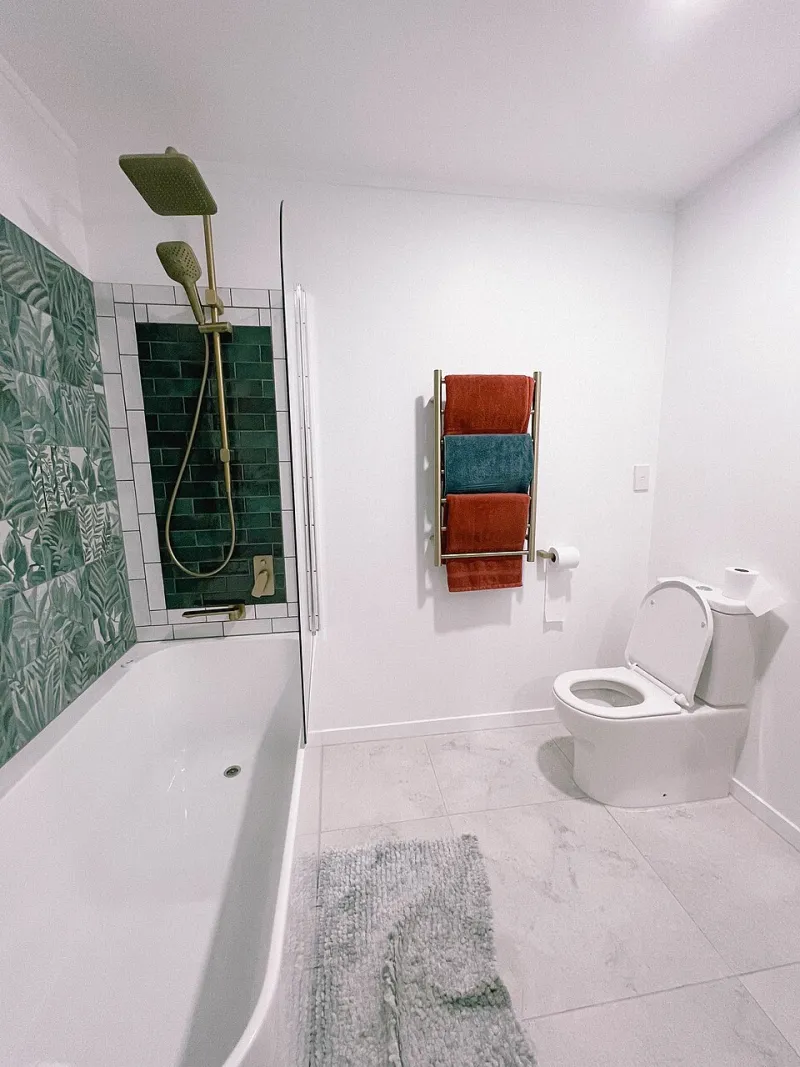
Photo: Smtzzz, CC BY-SA 4.0, via Wikimedia Commons
Let's be honest about something. You've probably walked into a bathroom that looked perfectly fine on paper — new vanity, fresh paint, clean tile — and still felt vaguely depressing. And you've probably walked into another bathroom with older fixtures and nothing particularly fancy, and thought, this feels really nice. What's actually going on there?
The answer isn't always the budget. It's the design decisions — some deliberate, some unconscious — that shape how our brains perceive a space. Bathrooms are particularly interesting because they're small, enclosed, and heavily sensory environments. Every choice gets amplified. The good ones and the bad ones.
This piece is going to go a little deeper than "replace your hardware" advice. We're talking about the actual psychology of why some bathrooms feel luxurious and others don't, and what you can realistically do about it without gutting the room.
Lighting Is Doing More Work Than You Think
If there's one thing that separates a bathroom that feels like a five-star hotel from one that feels like a highway rest stop, it's lighting. Not just the fixture — the quality, direction, and color temperature of the light itself.
Most builder-grade bathrooms in America come with a single overhead light centered on the ceiling. This is, from a design standpoint, almost the worst possible lighting arrangement for a bathroom. Overhead light casts downward shadows on your face — under your eyes, beneath your nose, under your chin. It makes everyone look worse and makes the room feel flat and institutional.
Hospitality designers figured this out decades ago. Luxury hotel bathrooms light faces from the sides, not from above. Sconces flanking the mirror at roughly eye level (around 60 to 65 inches from the floor) create even, flattering illumination that makes both people and the room look dramatically better.
Color temperature matters enormously too. Those harsh, blue-white bulbs (5000K and above) feel clinical and unflattering. Warm white bulbs in the 2700K to 3000K range feel softer, more human, and — this is key — more expensive, even when they cost the same.
Adding a dimmer switch to your bathroom lighting is one of the highest-ROI moves you can make. A $20 dimmer and a warm-toned bulb can make a mediocre bathroom feel genuinely relaxing. That's not hyperbole — it's just basic sensory psychology.
The Grout Problem Nobody Talks About
Here's an uncomfortable truth: dirty, stained, or mismatched grout is doing more damage to your bathroom's perceived quality than almost any other single element. Our brains are wired to notice contrast and irregularity, and dingy grout lines create a constant low-level visual noise that registers as "cheap" even when we can't consciously articulate why.
Fresh grout — or re-grouted tile with a consistent color — reads as clean, intentional, and cared-for. If your tile is in decent shape but your grout is a mess, regrouting is one of the best returns on effort in bathroom renovation. It's tedious work, but the materials cost almost nothing and the visual impact is significant.
While we're on the subject of materials: the perceived quality of a bathroom surface has less to do with the material itself than with how it's installed and maintained. A well-installed ceramic tile with tight, consistent grout lines looks more expensive than a poorly installed natural stone with uneven joints and sloppy caulking. Execution matters more than price point.
Spatial Flow and the Clutter Penalty
Here's a design principle that applies everywhere but hits hardest in bathrooms: visual clutter doesn't just look messy — it makes a space feel smaller and cheaper. Our perception of room quality is heavily influenced by how much cognitive work we have to do to process what we're seeing. A bathroom with too many competing objects, colors, and textures forces the brain to work harder, and that friction registers as discomfort.
Luxury bathrooms aren't just expensive — they're edited. Products are stored out of sight. Surfaces are clear. The visual palette is limited and intentional. You don't need a large bathroom to achieve this feeling; you need a disciplined one.
Practical moves: install a medicine cabinet or recessed shelving to get products off the counter. Use matching dispensers for soap, lotion, and cotton balls rather than leaving original packaging out. Limit your towel display to one or two folded towels in a consistent color. These changes cost almost nothing and shift the entire feel of the room.
Hardware: The Jewelry of the Bathroom
There's a reason interior designers obsess over hardware. Towel bars, toilet paper holders, faucet finishes, cabinet pulls — these are the details that signal whether a room is considered or careless. And they're also one of the most affordable ways to upgrade a bathroom.
The key isn't necessarily choosing expensive hardware — it's choosing cohesive hardware. Mixing brushed nickel, chrome, and oil-rubbed bronze in the same bathroom is one of the most common mistakes homeowners make. Each finish is fine on its own; together, they create visual chaos that reads as cheap even when the individual pieces aren't.
Pick a finish and commit to it throughout the room. Matte black is having a moment right now and tends to photograph beautifully. Brushed gold (not shiny gold — brushed) feels current and warm. Brushed nickel remains a safe, versatile classic. Whatever you choose, make sure your faucet, towel hardware, toilet paper holder, and light fixture all speak the same language.
The One Thing Most People Overlook
We've covered lighting, grout, clutter, and hardware — but there's one element that almost never makes it into bathroom upgrade listicles, and it's arguably the most psychologically powerful of all: scent and sound.
High-end spas and hotels spend serious money on ambient scent because smell is processed by the brain's limbic system — the same region that handles emotion and memory. A bathroom that smells good doesn't just smell good; it feels better. A simple reed diffuser or a quality candle in a consistent, clean scent (eucalyptus, cedar, and white tea are popular for bathrooms) creates an immediate sensory signal of quality.
Sound is less controllable but worth thinking about. If your bathroom fan sounds like a small aircraft taking off, replacing it with a quiet, modern exhaust fan makes the space feel more refined. It's a $50 to $150 fix that changes the experience of using the room every single day.
Putting It All Together
The bathrooms that feel luxurious aren't always the ones with the most expensive tile or the fanciest vanity. They're the ones where someone thought carefully about how the space would actually be experienced — the light, the smell, the visual cohesion, the absence of clutter.
You don't need a full renovation to close the gap between a bathroom that feels budget and one that feels boutique. You need to understand which levers actually move the needle, and then pull them deliberately. Start with the lighting. Fix the grout. Edit the clutter. Unify the hardware. Add a scent. That's a bathroom transformation that costs a few hundred dollars and a weekend — and makes a difference you'll notice every single morning.