Your Bedroom Is Making Your House Sick: The Ventilation Problem Nobody Talks About

Here's something most homeowners never think about: every single night, you and your family are essentially turning your bedrooms into humidity machines. A sleeping adult exhales roughly a pint of moisture per hour. Multiply that by a full night's sleep, add a couple of kids down the hall, and your bedrooms are generating serious amounts of water vapor — night after night, year after year — with nowhere to go.
Kitchens have range hoods. Bathrooms have exhaust fans. Laundry rooms get vented to the outside. But bedrooms? They typically get a window that stays closed nine months out of the year and a door that's shut for privacy. That's it. And that neglect is quietly setting up some of the most expensive structural failures in residential housing.
Why Bedrooms Are Ground Zero for Moisture Damage
The reason bedrooms get overlooked in moisture management conversations is simple: the damage is invisible for a long time. In a bathroom, you see steam. You smell mildew. The problem announces itself. In a bedroom, moisture accumulates slowly and silently inside wall cavities, under flooring, and within the framing itself — long before you notice a single thing is wrong.
Here's what's actually happening. Warm, humid air from your breath and body heat rises and migrates toward cooler surfaces — exterior walls, window frames, the space between your ceiling drywall and the attic above. When that warm, moist air hits a cold surface, it condenses. That condensation soaks into insulation, wood framing, and drywall paper. Over months and years, it creates the perfect environment for mold colonies and wood rot to take hold.
The most vulnerable spots? Corner bedrooms with two exterior walls, rooms above garages or unheated crawl spaces, and any bedroom with inadequate attic insulation above it. These are the rooms where structural failures tend to originate — and where homeowners are almost always caught completely off guard.
The Mold You Can't See Is the Mold That Costs You the Most
Visible mold on a windowsill or wall surface is annoying, but it's manageable. The mold growing behind your drywall, inside your wall cavities, and along your roof framing is a different problem entirely.
By the time you can smell musty air in a bedroom or see discoloration pushing through paint, mold has typically been colonizing behind the surface for months. At that stage, remediation isn't a weekend DIY project — it's a contractor conversation that often starts at $3,000 and climbs fast depending on how deep the damage goes. If structural framing is involved, you're looking at potential costs that can reach well into five figures.
Wood rot follows a similar pattern. Framing lumber that stays damp long enough doesn't just grow mold — it loses structural integrity. Floor joists, wall studs, and roof rafters that have been exposed to chronic moisture can soften and weaken over years without any visible exterior sign. Some homeowners only discover the extent of the damage during a home inspection when they're trying to sell — which is exactly the worst possible moment to find out.
What "Adequate Ventilation" Actually Means for a Bedroom
Building codes in the US require bedrooms to have windows that can open for emergency egress, but that's a safety requirement, not a ventilation standard. Functional bedroom ventilation means actively moving air through the space — not just having the option to crack a window on a nice day in May.
There are a few practical approaches depending on your home's setup:
Improve air circulation from your HVAC system. Many homes have supply vents in bedrooms but no return air vents. That creates positive pressure — air comes in but can't efficiently leave — which pushes moisture into wall cavities. Adding a return vent, or at minimum keeping bedroom doors slightly open at night, helps your system circulate air properly.
Use a whole-house or room-level energy recovery ventilator (ERV). An ERV exchanges stale indoor air for fresh outdoor air without the energy penalty of just opening a window. For homes in climates with cold winters or humid summers — which covers most of the US — an ERV is one of the smartest ventilation investments you can make. Costs vary widely, but a room-level unit starts around $200 to $400, while whole-house systems run $1,000 to $2,500 installed.
Run a dehumidifier during high-humidity months. In much of the South, Mid-Atlantic, and Midwest, summer humidity alone can push bedroom moisture levels into the danger zone. A quality dehumidifier in bedrooms during humid months is cheap insurance — units run $150 to $300 and can make a meaningful difference in ambient moisture levels.
Check your attic ventilation above bedrooms. If your attic isn't properly ventilated, heat and moisture build up directly above your bedroom ceiling. That creates a pressure differential that actually pulls moisture-laden air upward from your living spaces into the attic framing. Soffit vents, ridge vents, and adequate attic insulation work together to prevent this — and if your attic ventilation is compromised, no amount of bedroom-level fixes will fully solve the problem.
Signs Your Bedroom Ventilation Is Already Failing
You don't need a professional inspection to spot early warning signs. Walk through your bedrooms and look for:
- Condensation on windows, especially in the morning. This means indoor humidity is consistently too high.
- Paint that's peeling or bubbling near exterior walls or ceiling corners — moisture is migrating through the drywall.
- A musty smell that lingers even after cleaning. That's mold, and it's probably not on the surface you can see.
- Cold spots on interior walls during winter. This can indicate missing or compressed insulation, which creates condensation points inside the wall cavity.
- Allergy symptoms that improve when you leave the house. Indoor mold and poor air quality in sleeping spaces frequently triggers respiratory issues, and many people never connect the symptoms to their bedroom environment.
If you're seeing two or more of these signs, it's worth getting a moisture meter — they run $20 to $50 at any home improvement store — and checking readings on your walls and ceiling. Anything above 20% moisture content in drywall or wood is a problem that needs attention.
The Fix Is Usually Cheaper Than the Fallout
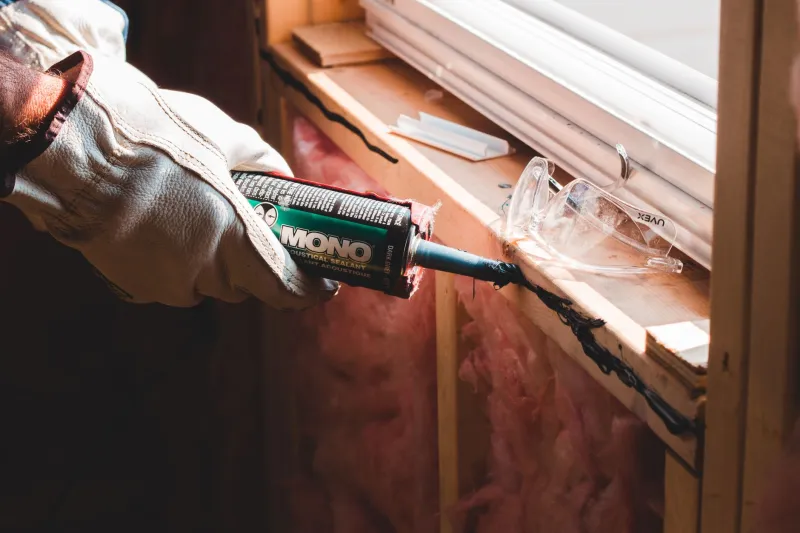
The frustrating thing about bedroom ventilation failures is that the solutions, caught early, are almost always affordable. Adding a return air vent might run a few hundred dollars. A dehumidifier is a one-afternoon purchase. Sealing air gaps around window frames and electrical outlets on exterior walls is a Saturday morning project with a $15 can of spray foam.
But let the problem run for five or ten years? Now you're talking about mold remediation, framing repairs, and potentially drywall replacement across an entire room or more. The math isn't complicated — it's just that nobody thinks to apply it to their bedrooms because the problem is invisible until it isn't.
Your home's structure doesn't care which room the moisture comes from. It just absorbs it, slowly and steadily, until something gives. Making sure your bedrooms are part of your home's ventilation strategy isn't a luxury upgrade — it's basic maintenance that protects everything you've invested in the place where you sleep.