The One Indoor Reading Your Home Is Begging You to Check (And You're Probably Ignoring It)
Most homeowners have a pretty solid relationship with their thermostat. Too hot? Bump it down. Too cold? Crank it up. Temperature is something we feel, so we manage it. But there's another number running quietly in the background of every room in your house — one that's doing real damage whether you notice it or not. That number is your indoor relative humidity level, and the odds are good you've never once checked it.
That's a problem. Because humidity doesn't wait around for you to feel it before it starts causing damage.
What's the Ideal Indoor Humidity Range, Anyway?
The EPA and most HVAC professionals point to the same sweet spot: between 30% and 50% relative humidity. Some experts nudge that upper limit down to 45% during warmer months when mold conditions are more favorable. Either way, the range is tighter than most people assume.
Below 30%, the air gets so dry it starts pulling moisture from everything it touches — your wood floors, your furniture joints, your nasal passages. Above 50%, you've created a welcome mat for mold, dust mites, and structural decay. It's not a dramatic threshold. Cross it consistently and the consequences show up slowly, then all at once.
The tricky part? Your body isn't a reliable humidity sensor. You can feel damp air when it's extreme, but a reading of 58% in a finished basement? You might walk through that room every day and never suspect a thing — right up until you notice the musty smell, the bubbling paint, or the black specks forming in the corner.
What Happens When Humidity Goes Wrong
Let's break down what's actually at stake, because this isn't just about comfort.
Mold and mildew. Mold doesn't need a flood to grow. It needs a surface, an organic food source (drywall, wood, dust), and sustained humidity above roughly 60%. Bathrooms, basements, and poorly ventilated laundry rooms are the usual starting points, but mold doesn't stay put. Once it establishes a colony, it spreads through air circulation — including your HVAC system.
Structural damage. Wood is hygroscopic, meaning it absorbs and releases moisture based on its environment. When your indoor humidity swings dramatically with the seasons — as it does in most of the US — wood expands and contracts. Over years, that movement loosens joints, warps floorboards, and can even affect framing. Homes in the Southeast and Midwest, where humidity swings are significant, take a particularly hard hit.
Health impacts. High humidity supercharges dust mite populations, which are a leading trigger for asthma and allergies. Low humidity dries out mucous membranes, making you more susceptible to respiratory infections. Neither extreme is doing your household any favors, especially if you have kids, elderly family members, or anyone with a respiratory condition.
Energy costs. Here's the one that often surprises people: humidity directly affects how hot or cold you feel. High indoor humidity in summer makes 74°F feel like 80°F, so you overcool the space to compensate. Dry air in winter makes you feel colder than you are, so you overheat. Managing humidity properly can meaningfully reduce what you're paying to condition your home.
How to Actually Measure It
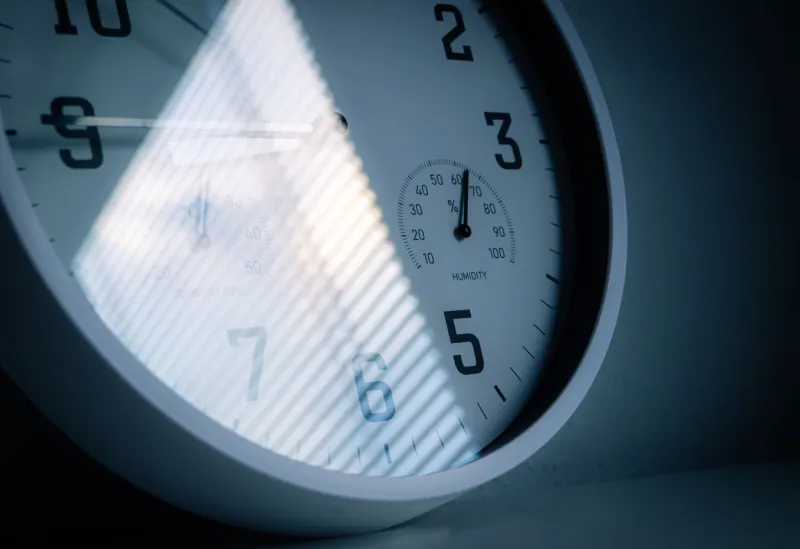
You need a hygrometer. That's it — a simple device that reads relative humidity, and they're widely available for $10 to $30 at any hardware store or on Amazon. Many smart thermostats (Ecobee, Nest, and similar models) include humidity sensors and display readings directly in their apps.
Placement matters. Don't just measure one room and call it done. Humidity varies significantly between floors — basements are almost always more humid than upper levels — and between rooms with different ventilation. Spend a week tracking readings in your main living areas, your basement, and your primary bedroom. You'll likely find the numbers tell different stories in different spots.
Fixes That Go Beyond Buying a Dehumidifier
A standalone dehumidifier is a solid tool, and if your basement is running consistently above 55%, you probably need one. But it's not the only lever you can pull — and for some problems, it's not even the right one.
HVAC adjustments. Most modern central air systems have some humidity control built in. Your AC naturally dehumidifies as it cools, but if it's oversized for your home (a surprisingly common problem), it cycles off before it has time to pull adequate moisture from the air. A conversation with an HVAC technician about your system's sizing and run-time patterns can reveal a lot. Some systems also support a whole-home humidifier attachment for the winter months, which is far more effective than running a dozen plug-in units.
Ventilation fixes. Exhaust fans in bathrooms and kitchens exist for a reason — they pull moisture-laden air out of your home before it has a chance to settle into surfaces. If your fans are weak, noisy, or if family members have developed the habit of skipping them, that's low-hanging fruit. Upgrade to a quiet, Energy Star-rated bath fan (Panasonic and Broan both make solid options) and consider putting it on a timer so it runs for 20 minutes after showers automatically.
Behavioral changes that cost nothing. Run your kitchen range hood when boiling water or cooking anything that steams. Don't air-dry laundry indoors unless you have excellent ventilation. Keep interior doors open when possible to allow humidity to distribute evenly rather than concentrating in specific rooms. Crack a window on low-humidity days to flush stale, moist air out — especially after cooking or bathing.
Crawl space and basement sealing. If you have a vented crawl space, you may be pulling in humid outdoor air from underneath your home every summer. Encapsulating the crawl space with a vapor barrier — and sometimes converting to a conditioned, sealed crawl space — is one of the most effective whole-home humidity interventions available. It's not a weekend DIY project, but it pays dividends for decades.
Houseplants (yes, really). In winter when indoor humidity tanks, a cluster of plants can add meaningful moisture to the air through transpiration. It won't replace a humidifier in a very dry climate, but it helps — and it looks good doing it.
A Simple Starting Point
If you take nothing else from this, take this: buy a hygrometer this week, put it somewhere you'll actually see it, and check it for a few days. If you're sitting outside the 30–50% window consistently, you now know you have a real problem worth solving — not a vague worry, but a specific, measurable one with practical solutions.
Your home is constantly communicating through its surfaces, its air quality, and its structure. Humidity is one of the clearest signals it sends. You just need the right tool to hear it.