Why Your Room Looks Amazing During the Day and Terrible at Night
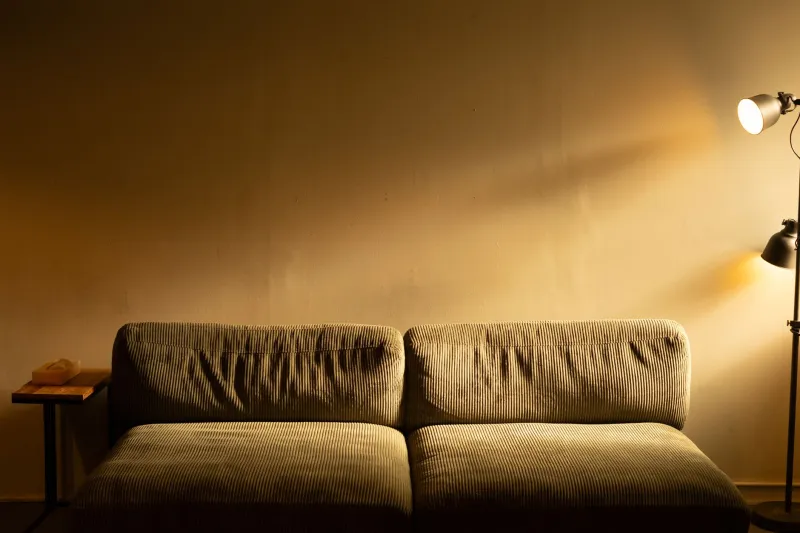
You spent weeks — maybe months — pulling a room together. The paint color is spot-on, the furniture fits the space beautifully, and the throw pillows you agonized over are genuinely perfect. Then evening rolls around, you flip on the lights, and something just feels... wrong. The walls look a different color. The cozy vibe you were going for has been replaced by something closer to a hospital waiting room.
You're not imagining it. And you're definitely not alone.
This is one of the most common frustrations homeowners run into, and it almost always comes down to one thing: lighting was an afterthought.
The Real Reason Rooms Look Different After Dark
Here's the thing about natural light — it's remarkably balanced. Sunlight shifts throughout the day, but it generally renders colors in a way that's close to how our eyes expect to see them. Artificial lighting, on the other hand, has a distinct color cast that interacts with everything in the room.
This is where color temperature comes in. Measured in Kelvins (K), color temperature describes whether a light source feels warm, neutral, or cool. A bulb in the 2700K–3000K range gives off a warm, amber-toned glow — think candlelight or an old incandescent. Move up to 4000K and you're in neutral-to-cool territory. Hit 5000K or above and you've basically recreated a fluorescent office.
The problem is that most people buy light bulbs based on wattage or brightness without thinking about color temperature. A cool, bright bulb can make a soft greige wall look stark gray. A warm bulb might turn a crisp white trim slightly yellow. Your carefully chosen paint color — the one that looked gorgeous on the sample card — can shift noticeably depending on what's lighting it.
Before you repaint or return anything, try swapping your bulbs first. It's a $10 fix that can completely change the feel of a room.
The Layered Lighting Concept Most Homeowners Skip
Professional interior designers almost always talk about layered lighting, and it's one of those concepts that sounds fancy but is actually pretty intuitive once you break it down.
There are three basic layers:
- Ambient lighting — the general, overall illumination in a room (usually your ceiling fixture or recessed lights)
- Task lighting — focused light for specific activities, like reading lamps, under-cabinet kitchen lights, or vanity lights in a bathroom
- Accent lighting — decorative light that adds depth and highlights features, like a picture light over artwork or LED strip lighting inside a bookcase
Most rooms in American homes rely almost entirely on a single overhead light. That's it. One source, coming from directly above, casting flat light across every surface. It's functional, but it's also kind of soul-crushing from an aesthetic standpoint.
When you add layers, something interesting happens. The room starts to feel three-dimensional. Shadows fall in interesting ways. Corners that used to disappear into darkness come alive. The space feels intentional rather than just illuminated.
You don't have to rewire anything to get there. Floor lamps, table lamps, plug-in sconces, and battery-powered puck lights can all add layers without touching an electrical panel.
Dimmer Switches: The Cheapest Upgrade With the Biggest Payoff
If there's one home improvement move that consistently gets underestimated, it's installing dimmer switches. A standard dimmer runs anywhere from $15 to $40 at any hardware store, and the installation is a straightforward DIY project for most single-pole switches.
The ability to dial your lighting down changes everything about how a room functions throughout the day. Bright in the morning when you need to focus, lower and warmer in the evening when you want to wind down — the same room can feel completely different just by adjusting intensity.
One thing to check before you buy: make sure your bulbs are dimmable. Most LED bulbs sold today are, but some aren't, and using a non-dimmable bulb with a dimmer switch can cause flickering or buzzing. It'll say right on the packaging.
Strategic Fixture Placement Makes a Bigger Difference Than You Think
Where your light sources are positioned matters as much as what kind of light they produce. A common mistake is centering a floor lamp or table lamp in a way that's symmetrically pleasing but functionally useless — it ends up lighting nothing in particular.
Instead, think about what you actually want to illuminate:
- Place lamps near seating areas, not just at the edges of a room. If you read on the couch, the lamp should be beside or slightly behind you, not across the room.
- Light toward walls rather than straight down. A lamp that throws light onto a wall creates a soft, indirect glow that feels warm and expansive. A downward-facing fixture just creates a puddle of light on the floor.
- Use accent lighting to define zones. In an open-concept living space, a pendant light over a dining table or a concentrated lamp cluster near a reading chair helps define distinct areas within the larger room.
Also worth noting: mirrors. Placing a lamp near a mirror essentially doubles its output and bounces light into areas that might otherwise feel dim. It's a classic trick, and it works.
Evaluating Your Lighting Before You Renovate
If you're planning a renovation — even something as simple as repainting — do yourself a favor and evaluate your lighting situation first. Spend an evening in the room with the lights you currently have. Notice where it feels flat, where shadows fall awkwardly, and whether the color temperature is working with or against your finishes.
A few questions worth asking:
- Does the room have at least two or three distinct light sources, or just one overhead fixture?
- Are the bulbs in the room all the same color temperature? Mixing warm and cool sources in one space creates visual chaos.
- Is there any accent lighting, or does everything blend into the same flat plane?
- Can you control the brightness, or is it all-or-nothing?
Answering these honestly before you pick new paint colors or buy new furniture will save you the frustration of discovering — after the fact — that your choices look completely different under your actual lighting conditions.
Small Fixes, Big Results
The good news in all of this is that lighting is one of the most fixable things in a home. Unlike structural changes or major renovations, most lighting improvements are low-cost, low-commitment, and completely reversible. A new lamp, a set of warm-toned bulbs, a couple of dimmer switches — these aren't big projects. They're afternoon errands.
But the impact they have on how a room feels at night? That part's pretty significant. The space you've already put time and money into building can finally look the way it deserves to — even after the sun goes down.