Everybody's Too Hot or Too Cold: How to End the Thermostat Standoff and Actually Save Money Doing It

If your household has a designated thermostat-toucher and at least one person who sneaks it back the second they leave the room, you're not alone — and you're definitely not saving money. The great home temperature debate is costing American families hundreds of dollars a year, and the fix isn't just about compromise. It's about being smarter than the problem.
Let's dig into why this keeps happening, what it's actually doing to your utility bills, and how to set up your home so everyone can stop fighting and start being comfortable.
Why We Can't Agree on Temperature (It's Not Just Stubbornness)
Here's something that might take the edge off the next argument: people genuinely experience temperature differently, and it's largely biological. Body size, metabolism, age, hormonal cycles, and even how much muscle mass someone has all affect how warm or cold a person feels at any given moment. A 2019 study published in Nature Climate Change found that women tend to prefer indoor temperatures about five degrees warmer than men do on average. Older adults often run cooler. Kids can be all over the map.
So when your partner cranks the AC to 68°F and you're reaching for a blanket in July, neither of you is being dramatic. You're just wired differently.
The problem is that most American homes are set up with a single thermostat running a single-zone system — meaning one temperature setting is supposed to satisfy everyone in every room, all day long. That's a setup designed to fail, and it usually does.
The Real Dollar Cost of the Thermostat Tug-of-War
Every degree you push your HVAC system beyond its set point costs money. The U.S. Department of Energy estimates that turning your thermostat back just 7–10 degrees for eight hours a day can save as much as 10% annually on heating and cooling costs. Flip that around: every time someone bumps the thermostat up (or down) a few degrees during the day because they're uncomfortable, that savings evaporates.
For a household spending $2,000 a year on energy — which is close to the national average — that 10% swing is $200. And that's assuming the thermostat battles are mild. Families with strong opinions and easy thermostat access can do a lot more damage.
There's also the wear-and-tear angle. Constantly cycling your HVAC system on and off, or running it hard to compensate for temperature swings, shortens its lifespan. A new central air system runs anywhere from $5,000 to $12,000 installed. Protecting that investment by running the system smarter is worth taking seriously.
Zone-Based Heating and Cooling: The Actual Solution
The most effective long-term fix for household temperature conflicts isn't negotiation — it's zoning. A zoned HVAC system divides your home into separate areas (zones), each with its own thermostat and independently controlled dampers in the ductwork. The bedroom wing can stay cooler while the living room runs warmer. The home office can hold a steady 70°F while the rest of the house does something different.
Installing a full zoning system in an existing home isn't cheap — expect to spend $2,000 to $3,500 for a professionally installed multi-zone setup — but the energy savings and comfort gains often justify it within a few years, especially in larger homes or two-story layouts where temperature variation is already a problem.
For a less expensive entry point, ductless mini-split systems are worth a look. These wall-mounted units heat and cool individual rooms independently and don't require ductwork at all. They're particularly popular for additions, converted garages, and rooms that always seem to be the wrong temperature no matter what. A single-zone mini-split installation typically runs $1,500 to $3,500 depending on capacity and labor costs in your area.
Smart Thermostats: The Middle Ground That Actually Works
If a full zoning overhaul isn't in the budget right now, a smart thermostat is the most accessible upgrade that genuinely moves the needle. Devices like the Google Nest, Ecobee, or Honeywell Home T9 learn your household's patterns, adjust automatically based on occupancy, and let multiple family members set preferences through a shared app.
The Ecobee, for example, comes with remote room sensors that detect temperature and occupancy in different parts of the house and use that data to balance comfort more evenly across zones — even without a full zoning system. It's not a perfect substitute, but it's a meaningful improvement over a basic programmable thermostat and a household full of competing opinions.
Smart thermostats typically pay for themselves within a year or two through energy savings. The DOE's estimates suggest savings of 8% on heating and cooling bills on average, which on a $2,000 annual energy spend is about $160 a year. Most smart thermostats retail between $130 and $250.
Behavioral Fixes That Cost Nothing
Before you spend a dime on hardware, there are a few no-cost strategies that help more than people expect.
Set a household baseline and stick to it. Agree on a "neutral" temperature — somewhere between the two extremes everyone's fighting over — and treat it as the default. From there, individuals can layer up, use fans, or open a window rather than adjusting the central system.
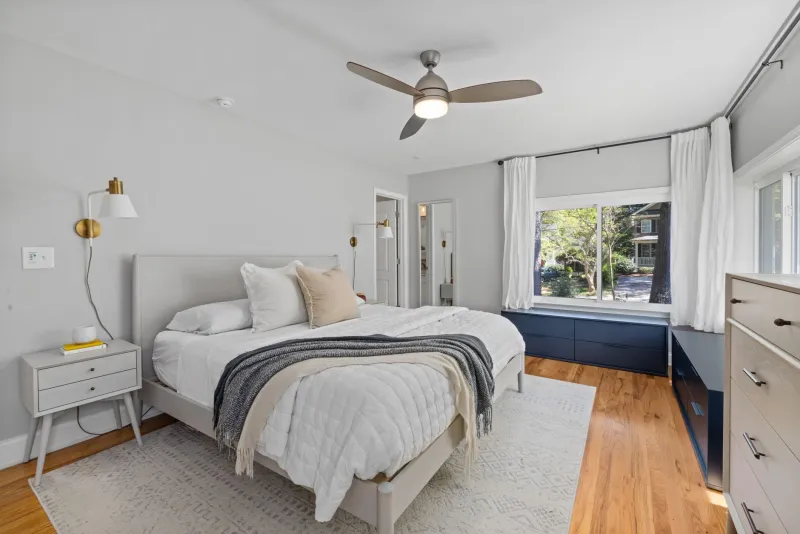
Use ceiling fans strategically. A ceiling fan running counterclockwise in summer creates a wind-chill effect that makes a room feel about four degrees cooler without changing the actual air temperature. In winter, run it clockwise on low to push warm air down from the ceiling. This simple switch lets you keep the thermostat at a more moderate setting and still have people feel comfortable.
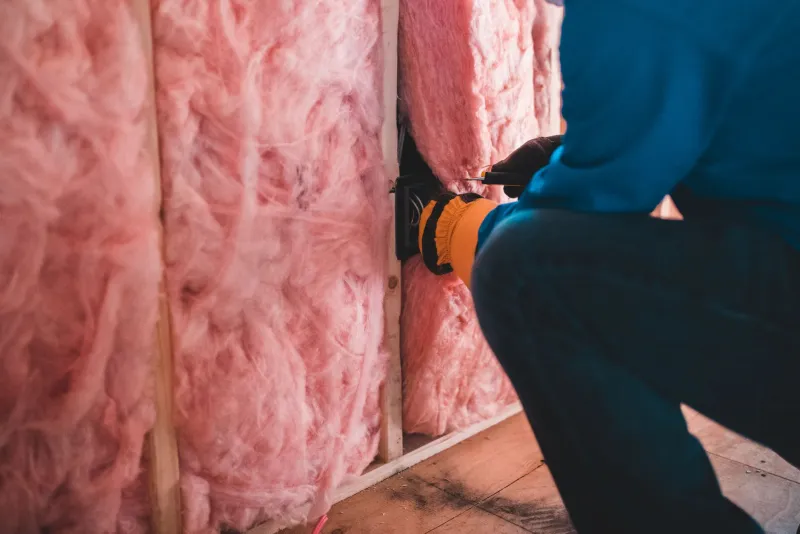
Block heat gain and loss at the source. Drafty windows, poor insulation, and gaps around doors are often the real reason one person is always cold and the other is always sweating. A quick audit of your home's air sealing — especially around windows, outlets on exterior walls, and attic access points — can dramatically reduce the temperature swings that fuel the thermostat wars in the first place.
Time the thermostat to your schedule. If the house is empty during the day, there's no reason to maintain a comfort temperature for nobody. A programmable or smart thermostat that ramps up 30 minutes before people get home is an easy win that most households leave on the table.
Finding the Compromise That Doesn't Feel Like Losing
At the end of the day, household temperature comfort is partly a systems problem and partly a communication one. The families who crack it aren't necessarily the ones with the fanciest equipment — they're the ones who've had the honest conversation about what comfort actually means to each person and built a plan around it.
That might mean investing in zoning. It might mean buying a smart thermostat and agreeing to trust the schedule it learns. It might mean one person keeps a cardigan on the couch and the other keeps a small desk fan in their home office. Usually it's some combination of all three.
What it almost never means is leaving a single thermostat in the hallway and hoping for the best. That approach costs you money, comfort, and more than a few evenings of low-grade domestic friction. You deserve better than that — and honestly, so does your energy bill.